
Few grapes bring as strong an opinion among wine enthusiasts as does Riesling. Known for its sweet, floral aromas and high acidity, Riesling is a complex white wine that often surprises people. Many established wine drinkers consider Riesling among their favorite wines and for good reasons. From its origins in Germany, where it’s sometimes referred to as Johannisberg Riesling, this incredible grape variety has spread across the globe, adapting to a wide variety of climates and terrains. This adaptability has led to an impressive array of wine styles, from bone-dry to luxuriously sweet.
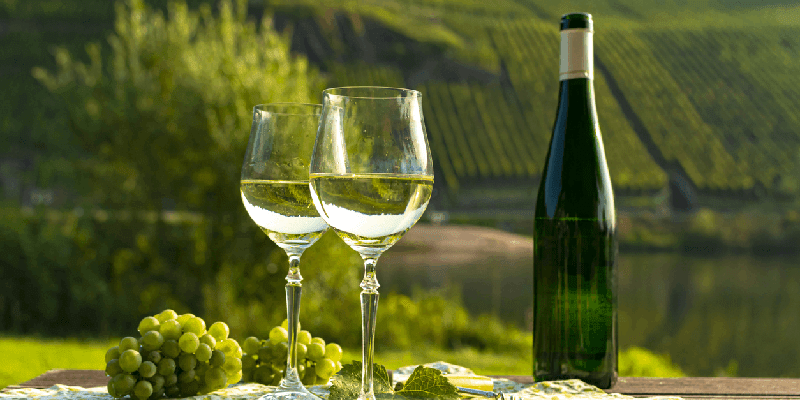
The Riesling Grape Taste Profile: From Sweet to Dry
Sweet Riesling
Sweet Rieslings are perhaps what the grape variety is most famous for, especially among those new to wine. These wines are rich with a symphony of flavors that can include honey, ripe apple, peach, apricot, and even tropical fruits like pineapple or mango. Some may also exhibit notes of petrol or wet slate, a signature characteristic that develops as the wine ages.
In sweet Rieslings, the high natural sugar content is balanced beautifully by the grape’s inherent high acidity, preventing the wine from being cloyingly sweet. This balance results in wines that are lush and complex, with a lingering finish that can evoke additional flavors of citrus or ginger.
German sweet Rieslings, categorized by terms such as “Spätlese” (late harvest) or “Trockenbeerenauslese” (dried berries selected harvest), are classic examples of how intricate and sophisticated a sweet wine can be. These wines often age extraordinarily well, with their complexity deepening over the years.
Dry Riesling
On the other end of the spectrum, dry Rieslings are wines that have little to no residual sugar, making them crisp and refreshing. These wines are often high in acidity, which complements their bright flavors of green apple, lime, and sometimes even salty or flinty mineral notes.
Dry Rieslings, often labeled as “Trocken” in Germany, can also express a range of herbaceous and floral notes, such as jasmine or freshly cut grass. They are generally lighter in body compared to their sweet counterparts and often have a clean, sharp finish that makes them incredibly food-friendly.
Regions like Alsace in France or Clare and Eden Valley in Australia are well-known for producing bone-dry Rieslings with pronounced mineral characteristics and more robust body. The United States also offers a variety of dry Rieslings, particularly from regions like the Finger Lakes in New York and Washington State.
Regions Where Riesling is Grown
Germany: The Birthplace of Riesling
Germany is often regarded as the birthplace and heartland of Riesling, and it’s where this esteemed grape variety has been nurtured for centuries. German Riesling, in particular, sets a global standard for what this grape can achieve, with key wine-growing regions such as Mosel, Rheingau, and Pfalz playing pivotal roles in its production and reputation. These regions each bring a unique flair to German Riesling, contributing to the wine’s incredible diversity in flavor, body, and aging potential.
- Mosel: Known for its steep, slate-rich vineyards along the Mosel River, this region produces Rieslings with crisp acidity and strong mineral notes. These wines often have a delicate, light body with green apple and floral flavors.
- Rheingau: Situated along the Rhine River, Rheingau Rieslings are often fuller-bodied with pronounced stone fruit flavors. They range from dry to sweet and are known for their ability to age gracefully.
- Pfalz: This region offers a warmer climate compared to other German wine regions, leading to Rieslings that are richer and more fruit-forward, often with tropical fruit notes.
Alsace, France
Located in northeastern France, Alsace is another stronghold of Riesling production. The region is characterized by its diverse terroir of limestone, granite, and volcanic soils. Alsace Rieslings are often dry and full-bodied with a rich texture and smoky or flinty notes. The wines here are more robust and are known for their ageability.
South Australia
In South Australia, regions like Clare Valley and Eden Valley have gained prominence for their Rieslings. Australian Riesling is typically bone-dry with high acidity and a lean texture. They feature striking lime, green apple, and tropical fruit notes. The unique Australian terroir, often rich in minerals, lends an additional layer of complexity to these wines.
United States
- Finger Lakes, New York: Known for its glacial soils and cooler climate, the Finger Lakes region produces Rieslings that are high in acidity and often have a signature minerality. These wines can range from bone-dry to quite sweet.
- Washington State: This Pacific Northwest state offers a more temperate climate, resulting in fruit-forward Rieslings with peach and apricot notes, balanced by crisp acidity.
Other Regions Growing Riesling
While Germany, Alsace, Australia, and the United States are key players in Riesling production, the grape is also grown in other parts of the world:
- Austria: Austrian Rieslings are often crisp, dry, and full of green apple and stone fruit flavors.
- New Zealand: In regions like Marlborough, Riesling wines tend to be aromatic with citrus and floral notes, usually made in a drier style.
- Canada: Particularly in Ontario and British Columbia, Rieslings can range from dry to ice wines, often featuring crisp acidity and varying degrees of sweetness.
What About Riesling Italico?
There are several white wine varieties with similar-sounding names that are not actually Riesling. “Riesling Italico,” known as “Welschriesling” in Austria and Germany, and “Laski Rizling” in Slovenia and Croatia, is one such grape. It’s grown primarily in Eastern Europe and parts of Italy. While it produces dry, crispy sparkling and sweet wines, it lacks the intensity and diversity of true Riesling and is completely genetically distinct from true Riesling.
Another grape that might cause some confusion is “Cape Riesling,” found in South Africa. Like Riesling Italico, Cape Riesling is not a true Riesling but a grape more accurately known as “Crouchen.”
Best Food Pairings with Dry Riesling
With their crisp acidity and clean, refreshing finish, dry Rieslings are some of the most versatile wines for food pairing. They excel with seafood, light meats, and dishes with green herbs. The high acidity cuts through rich textures and their mineral notes complement a variety of flavors. For dishes with lemon, dill, or even capers, a dry Riesling would be a perfect choice. Think grilled sea bass with lemon and dill, chicken piccata, shrimp and avocado salad, goat cheese and spinach stuffed chicken breast, and vegetable stir-fry with tofu.
Best Food Pairings With Sweet Rieslings
Sweet Rieslings are the perfect counterbalance to spicy and intensely flavored dishes. They tame the heat and complement the complexity of spices. Sweet Rieslings can also be an excellent match for pungent cheeses and rich, creamy desserts. Some ideas include buffalo wings with blue cheese, Szechuan beef, spicy curries, and goat cheese fig tarts.
With these wines, you get the added pleasure of the wine’s intricate flavors, like honey, ripe fruits, and sometimes even nuances of petrol or mineral, making the pairing experience even more enjoyable. As a rule of thumb, sweet wines pair best with sweet and spicy/sweet foods.
Best-Known Riesling Winemakers/Wine Brands
Some of the most revered names in Riesling come from Germany, including Dr. Loosen, J.J. Prüm, and Egon Müller. In Alsace, look for Trimbach or Zind-Humbrecht. Clare Valley in Australia offers standout producers like Grosset, and in the United States, wineries such as Chateau Ste. Michelle in Washington State have garnered attention for their Rieslings.
Whether you’re sipping a crisp, dry Riesling from the Finger Lakes or relishing the complex sweetness of a German Riesling, you’re partaking in a wine experience that has enchanted connoisseurs for centuries. Its exceptional ageability further makes it a favorite for collectors and wine professionals alike.
