
For wine lovers, how you serve wine can be as important as the wine itself. Two common tools, decanters and aerators, help improve the taste and smell of wine. Both aim to aerate wine, but they work differently and are used in various situations. Knowing the difference between a decanter and an aerator can help wine drinkers get the most out of their bottle.
Wine and Oxygen
Oxygen plays a pivotal role in shaping a wine’s character. When wine interacts with air, it undergoes subtle changes that can enhance its aroma and flavor. This interaction is the principle behind aeration and decanting. Using tools like decanters and aerators, wine enthusiasts can use the power of oxygen to elevate their wine-drinking experience, making each sip more expressive and enjoyable.
What is a wine decanter?
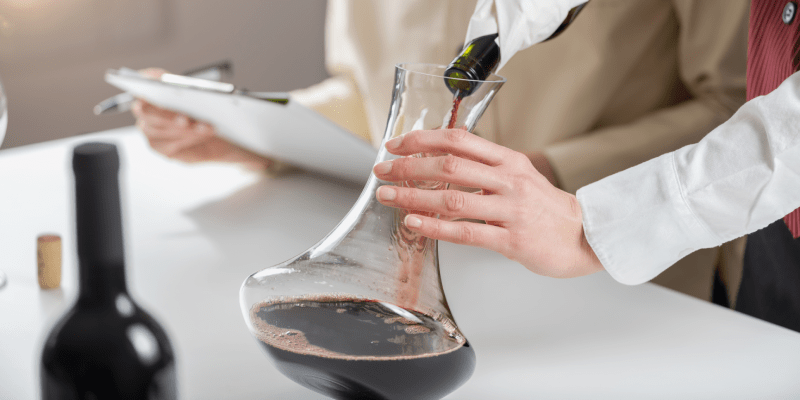
 Wine decanters are glass or crystal containers that wine is poured into before serving. Their primary purpose is to help separate the sediment from the clear wine.
As wine ages, sediment naturally forms from the tannins and compounds in the grapes. This is especially prevalent in older red wines, where the interaction between tannins and other compounds over time results in the formation of sediment. When this happens, the sediment needs to be removed carefully. The wine is slowly poured into a wine decanter before serving. This process keeps the sediment in the wine bottle, leaving the clear wine in the decanter for drinking.
Decanting wine not only removes sediment but also aerates it by letting the wine breathe. By introducing air, the wine’s flavors become more pronounced and expressive. Mature red wines, while primarily decanted for sediment separation, also benefit from this aeration, allowing their complex profiles to shine through more vividly. The marriage of aeration and decanting ensures that every glass poured offers the best possible representation of the wine’s character.
When should I use a wine decanter?
A wine decanter is only truly necessary if you’re enjoying an older wine that you suspect will have sediment built up that needs to be removed. Younger wines or newer wines are unlikely to need to be decanted because they won’t have much – if any – sediment to remove.
What is a wine aerator?
 Wine aerators are small devices that pass wine through a funnel of pressurized oxygen which aerates the wine quickly. They are often oval-shaped or can be put directly on top of the wine bottle. These tools come in various styles, including handheld aerators that can be held above a wine glass as you pour. Among the different types of aerators, bottle-stopper aerators offer a simple way to aerate wine. They fit snugly on the bottle’s mouth, allowing for easy pouring.
When should I use a wine aerator?
Using a wine aerator can significantly enhance the drinking experience for certain wines. By increasing the surface area exposed to air, aerators allow wines, especially young reds rich in tannins like Cabernet Sauvignon or Bordeaux blends, to breathe more effectively. This aeration softens the tannins and helps wines that may initially seem “tight” to open up, revealing a richer spectrum of aromas and flavors. Everyday wines, which might have minor imperfections or a pronounced sulfur note, can also benefit, becoming smoother and more enjoyable. If you’re short on time or just pouring a glass or two, an aerator offers a fast and easy solution, eliminating the need to decant the entire bottle.
However, very old or fragile wines can be too sensitive for aggressive aeration, risking the loss of their nuanced flavors. And while aerators excel in introducing air, they don’t separate sediment, meaning older wines might still benefit from the careful process of traditional decanting. Additionally, while some full-bodied white wines can be enhanced through aeration, many delicate whites, such as Riesling or Sauvignon Blanc, are best appreciated in their pristine state, without the intervention of an aerator.
Wine Decanter vs. Aerator: The Final Verdict
If you’re drinking a young red wine and are short on time, an aerator can quickly open up its flavors. However, for older wines with sediment or when you want a more impressive presentation, a decanter is the best choice. Both of these wine accessories should enhance your wine’s aroma and taste, so choose based on the wine you’re serving and the experience you desire.
