
When you think of how to store wine correctly, it helps to think of it like you would storing food. Wine is a living entity, and as such, it needs to be stored in a stable, controlled environment. While most wines can be stored at room temperature, just keeping them “cool” isn’t enough. There are some “dos” and “don’ts” you ought to know, and we’ll cover them all in this article.

Store Wine In a Dark Place
Three things are really bad for wine: too much oxygen, heat, and sunlight. Storing wine where sunlight can easily reach it is a sure way to spoil your wine. Ultraviolet rays from sunlight can cause a wine to age prematurely, affecting its color and balance, and the additional sunlight can raise the temperature of the wine. This is why many wines are sold in dark bottles.
Storing your wine in a cool, dark place preserves its integrity. Even artificial light can have an impact if the exposure is prolonged, so it’s best to install LED lighting in your wine storage area, which emits very low UV levels.
Invest in a Quality Wine Fridge
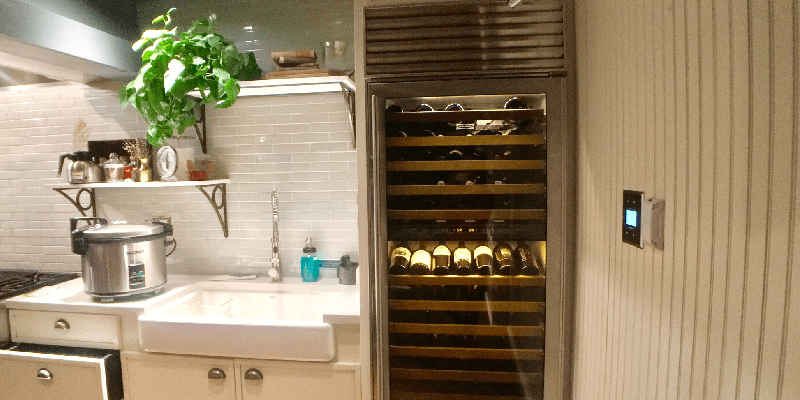
If you’re a regular wine drinker, chances are you don’t finish every bottle on the first try. While keeping your wines at room temperature can suffice as a short-term storage option, a wine fridge has benefits for both your opened and unopened wine bottles.
Wine fridges keep your wine at a consistent temperature. They have humidifiers to keep your wine corks from drying out, and their doors reflect UV rays and light. For unopened bottles of white wine and sparkling wine, a wine fridge is highly recommended. And while you can store most red wines at room temperature, it’s no guarantee your AC doesn’t go out, or someone doesn’t accidentally move the wine to the window sill.
These same benefits also apply to opened bottles of wine. To maximize the life of an opened bottle of wine, it needs to be kept in a chilled place. A climate-controlled environment like a wine cooler is an optimal solution.
If you’re able to afford it, we recommend a dual-zone wine fridge. These fancy machines allow you to have two separate temperature zones, one for reds and one for whites. While the ideal storage temperature for most wine is somewhere between 55–59°F (13–15°) different wine types should ideally be stored at different temperatures. Red wine should be stored at 55- 60 f and then warmed to ~65 f for serving. The ideal temperature for storing white wine is 50-55 degrees, and it should always be served chilled.
Don’t Store Your Wine on Top of a Refrigerator
The top of your fridge is probably warmer than you realize, especially if you’re in the kitchen a lot, using the oven, and are constantly in and out of the fridge. While the fridge top might be a convenient place to keep your wine, it exposes your bottles to heat, possible sunlight, and vibration.
Control The Humidity
Humidity plays an essential role in maintaining the cork’s health. Humidity at both ends of the spectrum can damage the cork in different ways.
A dry climate with low humidity can dry out a cork which will cause it to shrink. When this happens, air enters the bottle and oxidizes the wine, turning it sour. While high humidity isn’t as much of a concern, it can still cause mold formation and ruin wine labels, something to consider if you think it will affect the resale value for collectors.
Store Unopened Wine Bottles Horizontally
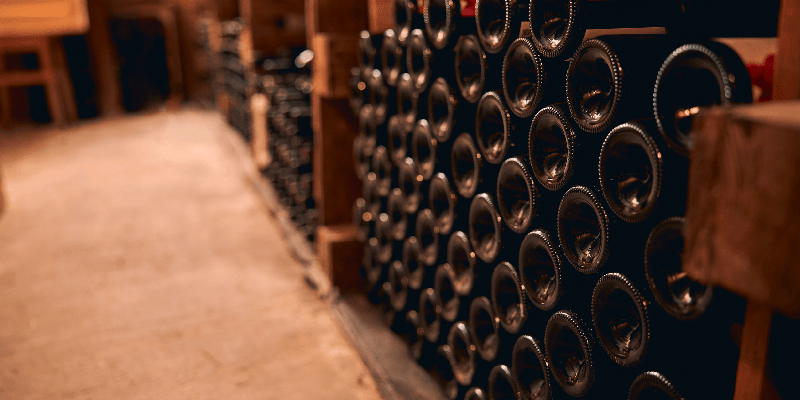
Laying wine bottles on their side keeps the cork in direct contact with the wine, preventing it from drying out and maintaining its seal. This is especially important for wines you plan to store for several years. For screw-cap bottles or wines you plan to consume shortly, vertical storage is acceptable.
Store Opened Wine Bottles Vertically
Even if you’ve sealed your wine with a stopper or another device, always store your opened wine vertically. First, the sealers might not be 100%, and laying your bottles down could cause spillage. But more importantly, storing an opened bottle of wine vertically minimizes the amount of oxygen that comes in contact with the wine, thus preserving it longer.
Reduce Vibrations
Slight, constant vibrations, like those from your fridge, are actually very bad for your wine, especially red wines. Over time, these small movements disturb the sediment in the wine, causing the elements to separate. When this happens, the aging process is sped up. Storing your wine in a stable, vibration-free environment like a wine storage cabinet in a basement will help maintain its quality for longer periods.
Consider a Wine Cellar
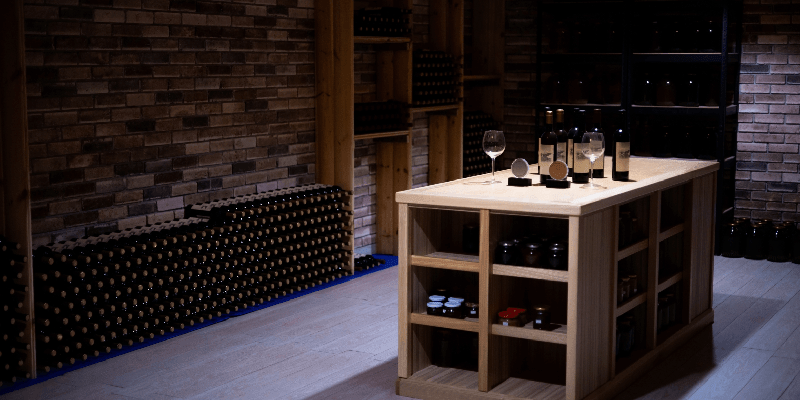
If you’re a serious wine collector or have a substantial wine collection, you might consider an upgrade to fridges and racks and just build your own wine cellar.
A custom wine cellar allows you to control temperature, lighting, and humidity levels accurately, offering the best long-term storage solution. Chances are your cellar could hold thousands of bottles, which if you’re planning to grow your collection, would be convenient.
If a custom wine cellar is out of the question, find a dedicated room for keeping your wine that follows the principles mentioned above. An unfinished basement would make the ideal wine room project, but if that isn’t an option, then a closet with a wine cabinet will do. Just try and make sure there’s ample space for the wine.
Use A Wooden Wine Rack
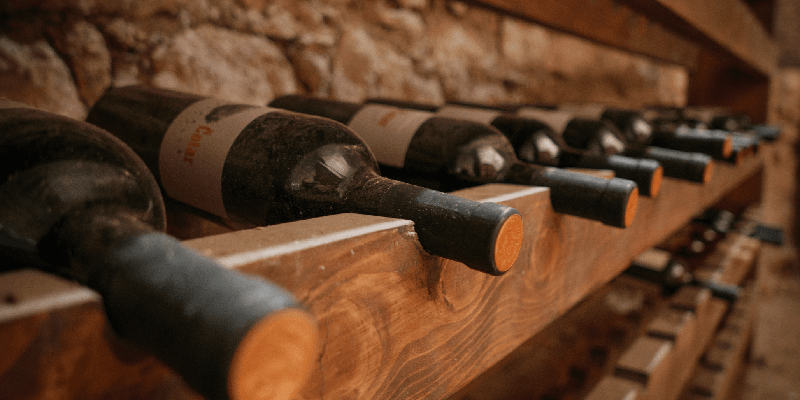
Wine racks are cool, and they look really, really nice in almost any room. But on a more practical level, wine racks keep the bottles secure and at the right angle. Wooden wine racks are recommended because wood is a poor conductor of heat and more resilient to humidity changes than metal wine racks, which can cause the wine bottle to warm. And if you can’t find what you need in the store, building your own custom wine rack is quite simple.
Maintain Excellent Air Quality
Wine corks are semi-permeable, allowing the tiniest amount of air to come in contact with the wine. While this is actually crucial for the aging process, strong odors from the surrounding environment can also penetrate the cork, affecting the wine’s flavor. Don’t keep your wine stored in your bathroom (gross), in a garage with lawn equipment and gas, or anywhere your pet’s litter box might be.
Keep Records and Labels
Keeping records of your wine collection is essential for extensive collections or investment-grade wines. Knowing when a bottle was purchased, its ideal drinking window and its provenance can enhance your wine-drinking experience. Accurate labeling also minimizes the need to move bottles around, reducing the risk of accidental breakage or agitation.
Take Special Care of Sparkling Wines
Sparkling wines are even more sensitive to storage conditions due to their carbonation. Store these bottles at the lower end of the temperature spectrum, around 50–55°F (10–13°C), and be sure to avoid absolutely any vibrations. Even the slightest agitation can affect the carbonation levels and alter the wine’s desired flavor and mouthfeel.
Understand The Types of Wines
Not every wine is meant for aging. Many white wines and rosés are best enjoyed within a year or two of their release. Reds with high tannin levels, like Cabernet Sauvignon, are better suited for long-term aging. Understanding the aging potential of your wines can greatly enhance your drinking experience, saving you from the disappointment of opening a bottle past its prime.
Understanding the nuances of how wine ages is crucial for transforming good bottles into extraordinary experiences. Whatever wine storage options you’re considering, the key is to create a stable, climate-controlled environment that will keep your favorite wines good until you’re ready to enjoy them.
